Key takeaways
- Refresh rate: Aim for at least 144Hz, and treat the 180Hz to 200Hz range as the sweet spot where fast motion stays crisp without demanding a top-tier graphics card.
- Panel type: Fast IPS panels deliver the best color and viewing angles, while VA curved panels offer deeper contrast and a more immersive wraparound feel.
- Resolution: 1080p keeps frame rates high on modest hardware, while a bargain 1440p panel sharpens detail if your GPU can drive it.
- Response time and sync: Look for a 1ms rating and FreeSync or Adaptive Sync support to eliminate ghosting and screen tearing during frantic action.
- Size and curvature: 24 to 25 inches keeps everything in your field of view for esports, while 27 to 32 inch curved screens trade some competitive focus for cinematic immersion.
What's inside
High-refresh gaming used to carry a premium tax, but in 2026 the sub-200-dollar bracket is where the most exciting value lives. Panels that once cost twice as much now push 180Hz and 200Hz refresh rates, IPS color, and adaptive sync, meaning smooth, tear-free play is finally accessible to players building on a tight budget. The catch is that this price band is crowded, and not every cheap monitor delivers on its spec sheet.
We sorted through the noise to find the displays that genuinely balance refresh rate, panel quality, and reliability without blowing past the budget. Below are our favorite picks under 200 dollars, plus a practical guide to choosing the right one and clear answers to the questions shoppers ask most.
As an Amazon Associate we earn from qualifying purchases at no extra cost to you. Product prices and availability are accurate as of the date shown and are subject to change.



⚡ Save on Your Next PC — Amazon Prime
Prime members get fast free shipping on the systems above, plus early access to Prime Day & Black Friday PC deals. New members get a 30-day free trial.
Watch: Best Gaming Monitors Under 200 2026 — Video Review
How to Choose a Gaming Monitor Under 200
- Refresh rate: Aim for at least 144Hz, and treat the 180Hz to 200Hz range as the sweet spot where fast motion stays crisp without demanding a top-tier graphics card.
- Panel type: Fast IPS panels deliver the best color and viewing angles, while VA curved panels offer deeper contrast and a more immersive wraparound feel.
- Resolution: 1080p keeps frame rates high on modest hardware, while a bargain 1440p panel sharpens detail if your GPU can drive it.
- Response time and sync: Look for a 1ms rating and FreeSync or Adaptive Sync support to eliminate ghosting and screen tearing during frantic action.
- Size and curvature: 24 to 25 inches keeps everything in your field of view for esports, while 27 to 32 inch curved screens trade some competitive focus for cinematic immersion.
The Best Gaming Monitors Under 200 Reviewed
SANSUI 27-Inch Curved 160Hz
The SANSUI 27-inch curved display is the crowd-pleaser of the group, wrapping a 1080p 160Hz panel into a 1500R curve that pulls you into the action. It is an easy recommendation for anyone who wants a big, immersive screen for single-player epics and casual competitive play alike.
SANSUI 27-Inch WQHD 200Hz
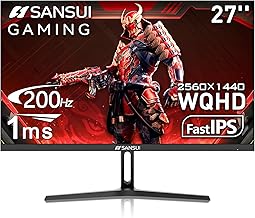
If you want sharper detail without leaving the budget, the SANSUI 27-inch WQHD steps up to a 2560×1440 IPS panel running at 200Hz. That combination of resolution and speed is genuinely rare under 200 dollars, making it the standout pick for players with a capable mid-range GPU.
Gawfolk 24.5-Inch 200Hz
The Gawfolk 24.5-inch is the compact esports option, hitting a full 200Hz at 1080p in a size that keeps your crosshair and the whole scene within a single glance. Built-in speakers round out a package aimed at fast, focused competitive play.
Sceptre Prime Curved 30-Inch
For maximum screen real estate on a budget, the Sceptre Prime 30-inch curved panel delivers an ultra-wide-feeling canvas with a 200+Hz refresh ceiling and integrated speakers. It is ideal for immersive RPGs and sim racing where sheer size heightens the experience.
KTC 24.5-Inch 180Hz Fast IPS
The KTC H25T7 combines a fast IPS panel, 180Hz native refresh with a 200Hz overclock, and a wide 128% sRGB gamut, making it the color-accurate choice for players who also create. It is the pick for anyone who refuses to choose between competitive speed and vibrant visuals.
Frequently Asked Questions
Is 1080p still good enough for gaming in 2026?
Absolutely. At 24 to 27 inches, 1080p stays sharp, keeps frame rates high on affordable hardware, and lets budget monitors reach the high refresh rates that matter most for competitive play.
Do I need 1440p or is it overkill on a budget?
1440p sharpens detail noticeably, and bargain panels like the SANSUI WQHD make it attainable. Just make sure your graphics card can drive the extra pixels at high frame rates before committing.
Are curved monitors better for gaming?
Curved panels boost immersion in single-player and racing titles by filling more of your peripheral vision. For pure esports, a flat panel keeps geometry consistent, so the choice comes down to genre preference.
Will a cheap monitor really hit its advertised refresh rate?
The models here deliver their rated refresh in practice, though some, like the KTC, reach their top number through an overclock you enable in the menu. Native refresh rates are always the reliable baseline.
Final Thoughts
The sub-200 monitor market in 2026 is proof that smooth, high-refresh gaming is no longer a luxury. The versatile SANSUI 27-inch curved is our all-rounder, the WQHD model wins on sharpness, and the Gawfolk 24.5-inch is the lean competitive weapon. Decide whether you value immersion or esports precision, match the resolution to your GPU, and any of these displays will transform how your games feel.