Key takeaways
- Match the card to your resolution: An 8GB card is still excellent for 1080p high-refresh gaming, but if you’re targeting 1440p with high textures and ray tracing, prioritize a 16GB model — VRAM is the most common bottleneck in this price bracket.
- Don’t ignore VRAM capacity: Modern titles increasingly push past 8GB at 1440p with high-quality texture packs. The extra headroom on 16GB cards buys you several more years of comfortable settings, which matters more than a few percent of raw shader performance.
- Understand the upscaling ecosystem: NVIDIA’s DLSS 4 with multi-frame generation is broadly supported and generally the more mature option, while AMD’s FSR implementation on RDNA 4 has closed much of the gap. Check whether the games you actually play support your preferred tech.
- Check physical fit and power draw: Measure your case clearance before buying — 2.5-slot and triple-fan designs are common here. Most cards in this class are efficient enough for a quality 550W–650W PSU, but verify the connector type your unit supplies.
- Weigh cooling and warranty: A well-cooled card runs quieter and boosts higher for longer. Look for zero-RPM idle modes, substantial heatsinks, and a three-year warranty — these details separate a good buy from a card you’ll regret in year two.
What's inside
Shopping for a graphics card under $500 has never been more confusing. The mid-range has become the most crowded segment on the market, with NVIDIA and AMD both pushing competing feature sets, wildly different VRAM configurations, and a dozen board partner variants of the same silicon. Two cards that look nearly identical on a spec sheet can deliver very different experiences at 1440p, and the marketing around upscaling and frame generation makes it harder than ever to tell where your money actually goes.
This guide cuts through that noise. We’ve focused on cards that genuinely land under the $500 mark at typical street prices in 2026, prioritizing real-world frame rates, VRAM headroom for modern textures, cooling quality, and long-term value rather than headline specs. Whether you’re building a 1080p high-refresh esports rig or a 1440p all-rounder, there’s a clear pick below for your budget and resolution target.
As an Amazon Associate we earn from qualifying purchases at no extra cost to you. Product prices and availability are accurate as of the date shown and are subject to change.




⚡ Save on Your Next PC — Amazon Prime
Prime members get fast free shipping on the systems above, plus early access to Prime Day & Black Friday PC deals. New members get a 30-day free trial.
Watch: Best Graphics Card Under $500 — Video Review
How to Choose Graphics Card Under $500
- Match the card to your resolution: An 8GB card is still excellent for 1080p high-refresh gaming, but if you’re targeting 1440p with high textures and ray tracing, prioritize a 16GB model — VRAM is the most common bottleneck in this price bracket.
- Don’t ignore VRAM capacity: Modern titles increasingly push past 8GB at 1440p with high-quality texture packs. The extra headroom on 16GB cards buys you several more years of comfortable settings, which matters more than a few percent of raw shader performance.
- Understand the upscaling ecosystem: NVIDIA’s DLSS 4 with multi-frame generation is broadly supported and generally the more mature option, while AMD’s FSR implementation on RDNA 4 has closed much of the gap. Check whether the games you actually play support your preferred tech.
- Check physical fit and power draw: Measure your case clearance before buying — 2.5-slot and triple-fan designs are common here. Most cards in this class are efficient enough for a quality 550W–650W PSU, but verify the connector type your unit supplies.
- Weigh cooling and warranty: A well-cooled card runs quieter and boosts higher for longer. Look for zero-RPM idle modes, substantial heatsinks, and a three-year warranty — these details separate a good buy from a card you’ll regret in year two.
The Best Picks Reviewed
ASUS Dual GeForce RTX 5060 Ti 16GB OC Edition
This is the sweet spot of the sub-$500 market and our overall pick: 16GB of GDDR7 gives it the memory headroom the standard 5060 lacks, making it genuinely capable at 1440p with ray tracing and DLSS 4 enabled. The Dual cooler is compact enough for mid-tower builds, stays quiet under load thanks to 0dB idle, and ASUS backs it with a three-year warranty.
XFX Swift Radeon RX 9060 XT 16GB
AMD’s strongest value play in this bracket, pairing 16GB of GDDR6 with RDNA 4’s much-improved ray tracing for typically less money than the equivalent NVIDIA card. The triple-fan Swift cooler is overkill in the best way, keeping temperatures and noise low even during extended sessions.
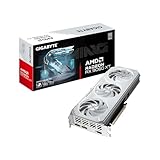
GIGABYTE Radeon RX 9060 XT Gaming OC ICE 16G
Functionally the same excellent silicon as the XFX card, but in a white two-slot shroud with server-grade thermal gel and a reinforced backplate — an easy recommendation if you’re building a light-themed system with tight clearance. The Hawk fan design runs cool and quiet, and the factory OC gives it a small edge over reference clocks.
ASUS Dual GeForce RTX 5060 8GB OC Edition
If your target is 1080p at high refresh rates, this is a smart, efficient buy that leaves budget for a better monitor or CPU. The 8GB of GDDR7 and full DLSS 4 support handle current titles comfortably at that resolution, though we’d steer 1440p buyers toward a 16GB option instead.
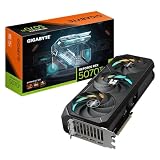
GIGABYTE GeForce RTX 5060 WINDFORCE OC 8G
A no-nonsense alternative to the ASUS Dual with the same 8GB GDDR7 configuration and a proven WINDFORCE cooler that punches above its price. It’s frequently the cheapest way into the RTX 5060 family, which makes it the pick when value per dollar is your single deciding factor.
Frequently Asked Questions
Is 8GB of VRAM still enough in 2026?
For 1080p gaming, yes — most titles run comfortably at high settings. At 1440p with high-resolution texture packs or ray tracing, 8GB is increasingly limiting, so we recommend stepping up to a 16GB card if that’s your target resolution.
Should I choose NVIDIA or AMD in this price range?
NVIDIA leads on ray tracing performance, DLSS 4 support breadth, and productivity workloads like video encoding and AI tools. AMD typically offers more VRAM and raw rasterization performance per dollar. If you play mostly traditional titles at 1440p, the RX 9060 XT is the better value; if you want the strongest feature set, go NVIDIA.
What power supply do I need for these cards?
A quality 550W unit is sufficient for the RTX 5060 and RX 9060 XT, while 650W is a safer floor for the RTX 5060 Ti — especially with a higher-end CPU. Always check the connector type your card requires before purchasing.
Can these cards handle 4K gaming?
Not comfortably at native resolution in demanding titles. With aggressive upscaling, the 16GB models can produce playable 4K frame rates in lighter or older games, but true 4K gaming realistically starts well above the $500 budget.
Final Thoughts
For most buyers, the ASUS Dual RTX 5060 Ti 16GB is the card to beat under $500 — it delivers the best blend of 1440p performance, VRAM headroom, and NVIDIA’s feature set in a compact, quiet package. If you’d rather save money without giving up memory capacity, the XFX Swift RX 9060 XT 16GB is the value champion of this roundup, while budget-focused 1080p builders will be perfectly happy with the GIGABYTE RTX 5060 WINDFORCE OC 8G.