Key takeaways
- Architecture: The 9800X3D uses Zen 5 with second-generation 3D V-Cache mounted beneath the compute die, while the 7800X3D uses Zen 4 with the cache stacked on top — the layout change is why the newer chip clocks higher and cools better.
- Clock speeds: 4.7GHz base and 5.2GHz boost on the 9800X3D versus 4.2GHz base and 5.0GHz boost on the 7800X3D, a meaningful gap in lightly threaded game logic.
- Overclocking: The 9800X3D is fully unlocked with a 95°C thermal ceiling; the 7800X3D is multiplier-locked and limited to Curve Optimizer and PBO tuning at 89°C.
- Gaming performance: Expect roughly 8–12% higher average frame rates from the 9800X3D at 1080p with a flagship GPU, stretching past 20% in CPU-heavy simulation, strategy and esports titles.
- Productivity: Zen 5’s IPC uplift plus higher clocks give the 9800X3D a 15–20% lead in rendering, compiling and encoding workloads.
- Power and cooling: Both are rated at 120W TDP, but the 9800X3D actually uses its power budget and runs warmer under load, so it benefits from a 240mm AIO or a strong dual-tower air cooler.
What's inside
AMD’s 3D V-Cache processors have held the gaming crown for three straight generations, and in 2026 most mid-range and high-end gaming builds still come down to two chips: the AMD RYZEN 7 9800X3D and the older AMD Ryzen 7 7800X3D. On paper they look almost identical — 8 cores, 16 threads, 96MB of L3 cache, the same AM5 socket, the same DDR5 and PCIe 5.0 support. In practice, the differences in clock speed, architecture and overclocking headroom are big enough to change which one belongs in your build.
The choice matters more now than it did at launch. GPUs have moved on, 1440p high-refresh is the new mainstream target, and CPU-bound simulation and competitive titles punish weaker chips harder than ever. At the same time, 7800X3D stock has thinned out and increasingly shows up in bundles rather than as a standalone tray part, while the 9800X3D has settled into steady availability. Below is a clear breakdown of how the two compare and which one is the smarter buy for your resolution, GPU and budget.
As an Amazon Associate we earn from qualifying purchases at no extra cost to you. Product prices and availability are accurate as of the date shown and are subject to change.


⚡ Save on Your Next PC — Amazon Prime
Prime members get fast free shipping on the systems above, plus early access to Prime Day & Black Friday PC deals. New members get a 30-day free trial.
Watch: Ryzen 7 9800X3D vs 7800X3D: Upgrade in 2026? — Video Review
Quick Verdict
The Ryzen 7 9800X3D is the better processor in every measurable way and the right pick if you game at 1080p or 1440p with a high-end GPU, chase 240Hz-plus frame rates, or want one chip that handles gaming and content creation. The Ryzen 7 7800X3D remains the smarter value buy if you can find it discounted or in a bundle, especially if you play at 4K or pair it with a mid-range GPU, where the two perform close to identically.
Key Differences
- Architecture: The 9800X3D uses Zen 5 with second-generation 3D V-Cache mounted beneath the compute die, while the 7800X3D uses Zen 4 with the cache stacked on top — the layout change is why the newer chip clocks higher and cools better.
- Clock speeds: 4.7GHz base and 5.2GHz boost on the 9800X3D versus 4.2GHz base and 5.0GHz boost on the 7800X3D, a meaningful gap in lightly threaded game logic.
- Overclocking: The 9800X3D is fully unlocked with a 95°C thermal ceiling; the 7800X3D is multiplier-locked and limited to Curve Optimizer and PBO tuning at 89°C.
- Gaming performance: Expect roughly 8–12% higher average frame rates from the 9800X3D at 1080p with a flagship GPU, stretching past 20% in CPU-heavy simulation, strategy and esports titles.
- Productivity: Zen 5’s IPC uplift plus higher clocks give the 9800X3D a 15–20% lead in rendering, compiling and encoding workloads.
- Power and cooling: Both are rated at 120W TDP, but the 9800X3D actually uses its power budget and runs warmer under load, so it benefits from a 240mm AIO or a strong dual-tower air cooler.
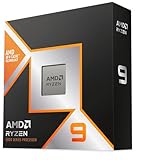
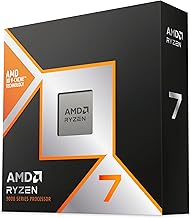
AMD Ryzen 7 9800X3D
The 9800X3D is the current default choice for a no-compromise gaming build. Moving the stacked cache below the CCD solved the thermal bottleneck that capped the previous generation, so AMD could ship it with normal Ryzen clock speeds and an unlocked multiplier. The result is a chip that keeps the enormous cache advantage in games while no longer giving up ground in anything else — a genuine all-rounder rather than a gaming specialist.
It shines brightest when the CPU is the limiting factor: 1080p and 1440p competitive shooters, large-scale strategy games, flight and racing sims, and heavily modded open-world titles. It also pairs better with future GPU upgrades, since a faster card will keep extracting frames from it long after a slower CPU has flattened out. Budget for decent cooling and DDR5-6000 CL30 memory to get the full benefit.
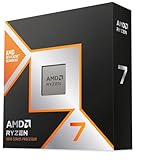
AMD Ryzen 7 7800X3D
The 7800X3D is still an outstanding gaming processor and, discount depending, often the better value. Its 96MB cache does the same heavy lifting in games, and at 1440p with a mid-tier GPU or at 4K in almost any configuration, the frame-rate difference between it and the 9800X3D shrinks to low single digits. It also runs cooler and draws less power in practice, which suits compact cases and quieter builds.
It is especially compelling as part of a bundle. The AMD Ryzen 7 7800X3D AM5 kit with the Cooler Master Hyper Spectrum V3 120mm PWM air cooler solves cooling in one purchase, while the Micro Center AMD 7800X3D and GIGABYTE B850 Gaming WF motherboard combo covers the platform side with DDR5, PCIe 5.0, Gen 5 M.2 and Wi-Fi 6. If either lands well under the cost of a comparable 9800X3D build, the older chip is easy to justify.
Which Should You Buy?
- For 1080p/1440p high-refresh gaming with a flagship GPU:
Affiliate disclosure. As an Amazon Associate we earn from qualifying purchases at no extra cost to you. Prices accurate as of the date shown.Ryzen 7 9800X3D vs 7800X3D: Upgrade in 2026?Check price on Amazon