Key takeaways
- Cores and threads: The 9950X3D is a 16-core, 32-thread part built from two CCDs; the 9800X3D is a single 8-core, 16-thread CCD. In multithreaded workloads that’s close to a 2x gap.
- Cache layout: The 9950X3D carries 128MB of total L3, but only one of its two CCDs has the stacked V-Cache. The 9800X3D’s 96MB sits on the single die every game thread runs on — simpler, and immune to scheduling mistakes.
- Clock speeds: The flagship boosts to roughly 5.7GHz on its non-cache die versus about 5.2GHz on the 9800X3D, which helps in lightly threaded and productivity work.
- Power and cooling: 170W TDP versus 120W. The 9800X3D is happy on a good 240mm AIO or a large tower cooler; the 9950X3D wants a 360mm AIO to stretch its legs.
- Gaming deltas: Across a broad suite at 1080p, the two typically land within a few percent of each other. Individual titles swing either way; neither is a generational leap over the other.
- Price: The 9950X3D commands a substantial premium. That money buys cores, not frames.
What's inside
The Ryzen 7 9800X3D has spent the better part of two years as the default answer to “what should I put in a gaming PC?” — and for good reason. But AMD’s flagship, the Ryzen 9 9950X3D, promises the same 3D V-Cache gaming magic with double the cores, which makes it tempting for anyone whose PC does more than play games. In 2026, with AM5 mature, DDR5 cheap, and GPUs like the RTX 50-series and RDNA 4 cards fast enough to expose CPU bottlenecks at 1440p, the gap between these two chips matters more than it used to.
The short version: these processors are far closer in games than their price difference suggests, and far apart in everything else. Below we break down where each one earns its money, including the newer 9950X3D2 Dual Edition and the bundle options worth considering if you’re buying a platform from scratch.
As an Amazon Associate we earn from qualifying purchases at no extra cost to you. Product prices and availability are accurate as of the date shown and are subject to change.


⚡ Save on Your Next PC — Amazon Prime
Prime members get fast free shipping on the systems above, plus early access to Prime Day & Black Friday PC deals. New members get a 30-day free trial.
Watch: Ryzen 9 9950X3D vs 9800X3D: 2026 Showdown — Video Review
Quick Verdict
Buy the Ryzen 7 9800X3D if gaming is the priority and you want the best frames-per-dollar on AM5 — it’s cooler, cheaper, and effectively tied with the flagship in most titles. Buy the Ryzen 9 9950X3D if you stream, edit video, compile code, run simulations, or simply want one machine that never makes you choose between work and play. Its 16 cores roughly double the productivity throughput while giving up nothing meaningful in games.
Key Differences
- Cores and threads: The 9950X3D is a 16-core, 32-thread part built from two CCDs; the 9800X3D is a single 8-core, 16-thread CCD. In multithreaded workloads that’s close to a 2x gap.
- Cache layout: The 9950X3D carries 128MB of total L3, but only one of its two CCDs has the stacked V-Cache. The 9800X3D’s 96MB sits on the single die every game thread runs on — simpler, and immune to scheduling mistakes.
- Clock speeds: The flagship boosts to roughly 5.7GHz on its non-cache die versus about 5.2GHz on the 9800X3D, which helps in lightly threaded and productivity work.
- Power and cooling: 170W TDP versus 120W. The 9800X3D is happy on a good 240mm AIO or a large tower cooler; the 9950X3D wants a 360mm AIO to stretch its legs.
- Gaming deltas: Across a broad suite at 1080p, the two typically land within a few percent of each other. Individual titles swing either way; neither is a generational leap over the other.
- Price: The 9950X3D commands a substantial premium. That money buys cores, not frames.
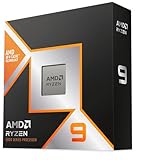
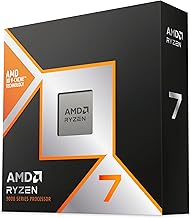
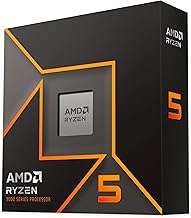
AMD Ryzen 9 9950X3D
The 9950X3D is the closest thing to a no-compromise desktop chip. AMD’s scheduling stack — the chipset driver working alongside Windows’ Xbox Game Bar heuristics — parks the non-cache CCD during gaming so titles run on the V-Cache die, then releases all 16 cores for rendering, exports, and compiles. When it works, and in 2026 it almost always does, you get 9800X3D-class gaming with workstation-class throughput.
It’s also the more demanding chip to build around. You’ll want a board with real VRM cooling and a competent cooler, which is why bundles make sense: the 9950X3D with the GIGABYTE X870E AORUS Elite WIFI7 ICE is a strong white-build pick with USB4 and 2.5GbE, the MSI PRO X870E-P combo covers PCIe 5.0 and Wi-Fi 7 at a lower price, and the Gigabyte X870 Gaming WF combo trims to Wi-Fi 6 and three M.2 slots for the most budget-conscious route into the flagship. Enthusiasts chasing the absolute ceiling should also look at the 9950X3D2 Dual Edition, which puts V-Cache on both CCDs and removes the parking question entirely.
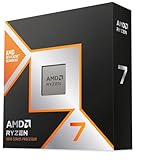
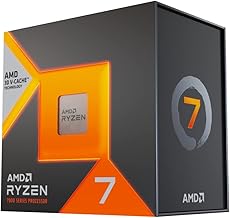
AMD Ryzen 7 9800X3D
The 9800X3D remains the sensible gaming default. Its second-generation V-Cache sits beneath the cores rather than above them, which improves thermal transfer and — crucially — makes it the first fully overclockable X3D part. With Precision Boost Overdrive and a decent cooler, it’s genuinely competitive with the flagship’s peak gaming clocks for a fraction of the outlay.
The trade-off is headroom in everything else. Eight cores handle gaming plus a Discord call and a browser without complaint, and they’ll manage single-PC streaming with NVENC or AV1 hardware encoding. Push into 4K timeline scrubbing, Blender renders, or large C++ builds and the deficit becomes obvious. If those workloads are occasional, the 9800X3D is still the better buy; if they’re daily, you’re paying for the flagship whether you like it or not.
Which Should You Buy?
- For pure gaming at 1080p or 1440p: pick the 9800X3D and put the savings into your GPU. It’s the highest-value decision in the entire build.
- For gaming plus content creation: pick the 9950X3D. Doubling core count for a single premium beats owning two mediocre machines.
- For streaming, simulation, or heavy multitasking: pick the 9950X3D — the spare cores absorb encoding and background load without touching your frame times.
- For a full platform build on a budget: consider the Micro Center CPU + motherboard combos, which frequently undercut buying the parts separately.
- For maximum multithreaded value without V-Cache: the standard Ryzen 9 9950X delivers the same 16 cores for less, if you accept a real drop in gaming performance.
Frequently Asked Questions
Is the 9950X3D actually faster in games?
Marginally, and inconsistently. Its higher clocks win some titles while the 9800X3D’s simpler topology wins others. Averaged across a large test suite the difference is small enough that no one should buy the flagship for frames alone.
Does the second CCD cause stuttering?
It did in early 2025 on some titles. With current chipset drivers and Windows builds, core parking is reliable. Keep AMD’s chipset software updated and leave Game Bar enabled.
Can I overclock either chip?
Yes. Both support Precision Boost Overdrive and Curve Optimizer, and the second-generation V-Cache design means neither carries the voltage restrictions of older X3D parts.
Is the 9950X3D2 Dual Edition worth the upgrade?
Only for enthusiasts. Cache on both CCDs eliminates scheduling dependency and helps a handful of cache-sensitive simulation titles, but it’s a niche premium over an already expensive chip.
Final Verdict
For most gamers in 2026, the Ryzen 7 9800X3D is still the smarter purchase — it delivers essentially flagship gaming performance for meaningf