Key takeaways
- 1080p suits smaller screens and lower-cost builds
- 1440p (QHD) balances clarity and frame rate on 27- to 32-inch panels
- Ultrawide formats boost immersion in single-player and sim titles
What's inside
Choosing a gaming monitor in 2026 means navigating a dizzying mix of refresh rates, resolutions, panel types, and curve options. The display is where all your hardware effort finally becomes visible, so the wrong choice can bottleneck a powerful rig or leave fast-paced games looking smeary. Getting it right transforms how responsive and immersive your games feel.
This guide breaks down the specs that actually matter and how they map to different types of players, from competitive shooters to sprawling single-player worlds. We reference current monitors across sizes and price points so you can see how the theory translates into real buying decisions.
As an Amazon Associate we earn from qualifying purchases at no extra cost to you. Product prices and availability are accurate as of the date shown and are subject to change.


⚡ Save on Your Next PC — Amazon Prime
Prime members get fast free shipping on the systems above, plus early access to Prime Day & Black Friday PC deals. New members get a 30-day free trial.
Watch: How To Choose A Gaming Monitor — Video Review
Refresh Rate and Response Time
Refresh rate, measured in hertz, dictates how many frames per second your monitor can display, while response time affects motion clarity. Competitive players chasing every advantage lean toward high-refresh panels like the 180Hz Samsung Odyssey G5 or even the 240Hz SANSUI curved monitor, both with fast response times that keep fast motion crisp. A 1ms response paired with high refresh is the recipe for smooth, blur-free action.
Resolution and Screen Size
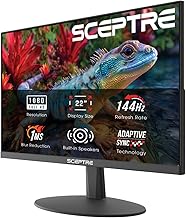
Resolution and size go hand in hand. A 27-inch QHD panel such as the ASUS TUF Gaming VG27AQ3A or Acer Nitro KG271U hits the sweet spot of sharpness and performance for most gamers. If you want more desktop real estate, a 32-inch QHD Samsung Odyssey G55C or an ultrawide 34-inch Odyssey G5 delivers extra immersion, while budget-focused players can still enjoy a crisp 22-inch Full HD Sceptre monitor.
- 1080p suits smaller screens and lower-cost builds
- 1440p (QHD) balances clarity and frame rate on 27- to 32-inch panels
- Ultrawide formats boost immersion in single-player and sim titles
Panel Type and Color Quality
IPS panels, like those in the ASUS TUF and Acer Nitro, offer wide viewing angles and accurate color that make games look vibrant. VA panels found in many curved monitors deliver deeper contrast, which suits atmospheric single-player games. Look for wide color coverage such as 130 percent sRGB or DCI-P3 95 percent if visual richness matters to you.
Adaptive Sync and Connectivity
AMD FreeSync and G-Sync compatibility eliminate screen tearing by syncing the display to your GPU’s output. Nearly all modern gaming monitors, including the Dell 27 Plus and Samsung Odyssey lineup, support FreeSync. Check that the monitor has the HDMI and DisplayPort inputs you need, plus extras like built-in speakers or height adjustment if those features suit your setup.
Curved vs Flat and HDR
Curved monitors like the 1000R Samsung Odyssey G55C or the SANSUI 1500R wrap the image around your field of view for a more immersive feel, especially at larger sizes. HDR10 support adds brighter highlights and richer contrast in supported games. Flat panels remain the preference for competitive play where perfectly straight lines aid aiming.
Frequently Asked Questions
Is 1440p or 1080p better for gaming?
1440p offers noticeably sharper visuals and is the current sweet spot for 27-inch monitors, provided your GPU can drive the higher resolution at your target frame rate.
How high a refresh rate do I need?
144Hz to 180Hz is plenty for most players, while competitive shooter fans may value 240Hz panels like the SANSUI curved monitor for the smoothest possible motion.
Do curved monitors help with gaming?
They enhance immersion in single-player and racing games, but many competitive players still prefer flat screens for straight reference lines when aiming.
What is FreeSync and do I need it?
FreeSync syncs the monitor’s refresh to your GPU to prevent tearing. It is widely supported and well worth having for smoother, cleaner gameplay.
Conclusion
The best gaming monitor is the one matched to how you play. Competitive gamers should prioritize high refresh rate and fast response on a 1080p or QHD IPS panel, while immersion seekers benefit from larger curved QHD or ultrawide displays with HDR. Balance refresh rate, resolution, and panel type against your GPU’s capabilities, and any of the monitors highlighted here will bring your games to life.