Key takeaways
- GPU silicon: The RTX 5070 uses the smaller GB205 die with roughly 6,144 CUDA cores, while the 5070 Ti steps up to GB203 with about 8,960 — a genuine class difference, not a light trim.
- Memory: 12GB of GDDR7 on a 192-bit bus versus 16GB on a 256-bit bus. The Ti’s bandwidth advantage is roughly a third, and it shows most at 4K and with ray-traced titles.
- Real-world performance: Expect the 5070 Ti to lead by around 20–25% at 1440p and closer to 30% at 4K, where the 5070 starts hitting VRAM and bandwidth ceilings.
- Power and PSU: The 5070 sits near 250W and is happy on a quality 650W supply; the 5070 Ti pushes around 300W and wants 750W, plus a proper 12V-2×6 connection.
- Ray tracing headroom: Both run DLSS 4 and Multi Frame Generation, but the Ti has enough native throughput that upscaling feels like a bonus rather than a requirement in path-traced games.
- Form factor choice: The Ti tier now has genuinely compact options such as the ASUS SFF-Ready Prime RTX 5070 Ti OC and the GIGABYTE RTX 5070 Ti Eagle OC ICE SFF, so small-case builders aren’t forced down to the 5070.
What's inside
NVIDIA’s Blackwell mid-range has settled into a clear two-tier structure, and by 2026 the GeForce RTX 5070 and RTX 5070 Ti have become the default recommendations for anyone building a 1440p or entry-level 4K gaming PC. They share the same architecture, the same DLSS 4 feature set with Multi Frame Generation, the same PCIe 5.0 interface and the same DisplayPort 2.1 outputs. What separates them is silicon, memory and headroom — and that gap is wider than the naming suggests.
The decision matters more now than it did at launch. Game engines have leaned harder into path tracing and high-resolution texture packs, and 12GB of VRAM has gone from “comfortable” to “adequate with settings management” at 4K. Meanwhile, board partners have matured their designs: there are now compact SFF-ready RTX 5070 Ti cards, quieter triple-fan coolers, and even an external Thunderbolt 5 option. Below is a straight comparison of what each tier actually buys you.
As an Amazon Associate we earn from qualifying purchases at no extra cost to you. Product prices and availability are accurate as of the date shown and are subject to change.


⚡ Save on Your Next PC — Amazon Prime
Prime members get fast free shipping on the systems above, plus early access to Prime Day & Black Friday PC deals. New members get a 30-day free trial.
Watch: RTX 5070 vs 5070 Ti: Which to Buy in 2026? — Video Review
Quick Verdict
The RTX 5070 is the smarter buy if you game at 1440p, play a lot of competitive titles, and want the lowest power draw and easiest build compatibility — the ASUS TUF Gaming RTX 5070 OC is a good example of the tier done well. The RTX 5070 Ti is the one to get if you want 4K, heavy ray tracing, or a card that will still feel comfortable in three years, thanks to 16GB of GDDR7 and a much wider memory bus. If your budget stretches to the Ti without compromising your CPU or monitor, take it.
Key Differences
- GPU silicon: The RTX 5070 uses the smaller GB205 die with roughly 6,144 CUDA cores, while the 5070 Ti steps up to GB203 with about 8,960 — a genuine class difference, not a light trim.
- Memory: 12GB of GDDR7 on a 192-bit bus versus 16GB on a 256-bit bus. The Ti’s bandwidth advantage is roughly a third, and it shows most at 4K and with ray-traced titles.
- Real-world performance: Expect the 5070 Ti to lead by around 20–25% at 1440p and closer to 30% at 4K, where the 5070 starts hitting VRAM and bandwidth ceilings.
- Power and PSU: The 5070 sits near 250W and is happy on a quality 650W supply; the 5070 Ti pushes around 300W and wants 750W, plus a proper 12V-2×6 connection.
- Ray tracing headroom: Both run DLSS 4 and Multi Frame Generation, but the Ti has enough native throughput that upscaling feels like a bonus rather than a requirement in path-traced games.
- Form factor choice: The Ti tier now has genuinely compact options such as the ASUS SFF-Ready Prime RTX 5070 Ti OC and the GIGABYTE RTX 5070 Ti Eagle OC ICE SFF, so small-case builders aren’t forced down to the 5070.
GeForce RTX 5070: The Efficient 1440p Pick
The RTX 5070 is built around a simple proposition: high-refresh 1440p at high or ultra settings without an expensive platform around it. In most current titles it clears 100 FPS at 1440p with DLSS quality mode, and in esports games it comfortably saturates a 240Hz panel. Cards like the ASUS TUF Gaming RTX 5070 OC add military-grade components, protective PCB coating and a large triple-fan cooler, which keeps the card quiet and thermally relaxed given the modest 250W target.
The trade-off is the 12GB frame buffer on a 192-bit bus. That is fine at 1440p today, and DLSS 4 does a lot of heavy lifting, but 4K texture packs, frame generation buffers and path tracing all consume VRAM. If you plan to keep the card for four or five years at 4K, the 5070 will increasingly ask you to dial back textures. At 1440p, that pressure is far less urgent. Note also that the TUF model is a chunky 3.125-slot design, so check clearance before buying.
GeForce RTX 5070 Ti: The 4K-Capable Step Up
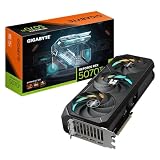
The RTX 5070 Ti is the more future-proof card by a clear margin. The wider 256-bit bus and 16GB of GDDR7 mean it holds up at 4K with DLSS, and it has the shader throughput to make ray tracing a default setting rather than a compromise. The GIGABYTE RTX 5070 Ti Gaming OC 16G is the conventional pick, with a large WINDFORCE cooler and factory overclock, while the MSI RTX 5070 Ti Ventus 3X PZ OC targets similar performance with a more restrained aesthetic and triple DisplayPort 2.1a outputs.
Small-form-factor builders are unusually well served here. The GIGABYTE Eagle OC ICE SFF and the ASUS SFF-Ready Prime RTX 5070 Ti — a 2.5-slot card with Axial-tech fans and dual BIOS — both fit cases that would reject a full-size 5070. There is even the ASUS ROG XG Mobile (2025) external enclosure with a 5070 Ti inside, connecting over Thunderbolt 5 for laptop users, though an internal card is always the better value if you have the space.
Which Should You Buy?
- For 1440p high-refresh gaming: pick the RTX 5070 — it hits the resolution’s sweet spot and leaves budget for a better monitor or CPU.
- For 4K or ultrawide: pick the RTX 5070 Ti; the extra bandwidth and 16GB buffer are what make 4K sustainable.
- For heavy ray tracing and path-traced titles: pick the 5070 Ti, which has the native headroom to avoid leaning entirely on upscaling.
- For small-form-factor builds: pick a 5070 Ti in SFF trim, such as the ASUS Prime SFF-Ready or GIGABYTE Eagle OC ICE SFF.
- For laptop or console-replacement setups: the ASUS ROG XG Mobile with RTX 5070 Ti is the only practical route to this class of performance over Thunderbolt 5.
Frequently Asked Questions
Is the RTX 5070 Ti worth the extra money over the 5070?
For most buyers, yes — the roughly 20–30% performance lift and the jump from 12GB to 16GB of VRAM together represent better long-term value than the price gap suggests. If you game strictly at 1080p or 1440p and plan to upgrade again in two or three years, the 5070 is the more sensible spend.