Key takeaways
- Resolution and size: At this budget, 27-inch QHD (2560×1440) is the clear winner. It delivers roughly 109 pixels per inch — noticeably sharper than 1080p — while remaining far easier to drive than 4K. A mid-range GPU can push high frame rates at 1440p in most modern titles, which is exactly where a high-refresh monitor pays off.
- Refresh rate over raw specs: 144Hz is the practical minimum in 2026, and 180Hz has become the standard at this price. The jump from 60Hz to 144Hz is transformative; the jump from 144Hz to 180Hz is a genuine but smaller improvement. Don’t pay a large premium for a few extra hertz if the money is better spent on panel quality.
- Panel technology: Fast IPS offers the best all-round balance of color accuracy, viewing angles, and motion clarity, and dominates this price bracket. VA panels deliver deeper contrast for dark, atmospheric games but can show smearing in fast motion. QD-OLED provides per-pixel contrast and near-instant response times, but only recently became attainable under $500 — and usually with compromises elsewhere.
- Adaptive sync support: Look for AMD FreeSync Premium or NVIDIA G-SYNC Compatible certification, ideally both. This eliminates screen tearing and reduces stutter when your frame rate fluctuates, which matters far more in real-world gaming than any headline response-time figure.
- Connectivity and ergonomics: Check for DisplayPort 1.4 (essential for high refresh rates), at least two HDMI 2.0 ports, and a stand with height, tilt, and swivel adjustment. USB-C with power delivery is a meaningful bonus if you also connect a laptop. A monitor you can position correctly is one you’ll actually enjoy using.
What's inside
Shopping for a gaming monitor under $500 has never been more confusing. Panel technology has fragmented into IPS, VA, and QD-OLED options that all claim to be “the best for gaming,” refresh rates have crept from 144Hz to 180Hz and beyond as a baseline expectation, and marketing spec sheets bury the numbers that actually matter — real response times, genuine HDR brightness, and color accuracy — under a pile of proprietary acronyms. The result is that two monitors with nearly identical listings can deliver wildly different experiences once they’re on your desk.
This guide cuts through that noise. We’ve focused on 27-inch 1440p displays, which remain the sweet spot for value in 2026: high enough resolution to look sharp without demanding a flagship GPU, and large enough to feel immersive without forcing you to move your head. Every pick below is realistically attainable under $500 at typical street pricing, and we’ve weighted our recommendations heavily toward value-for-money — what you actually get per dollar, not just what looks good on a box.
As an Amazon Associate we earn from qualifying purchases.




⚡ Save on Your Next PC — Amazon Prime
Prime members get fast free shipping on the systems above, plus early access to Prime Day & Black Friday PC deals. New members get a 30-day free trial.
Watch: Best Gaming Monitor Under $500 — Video Review
How to Choose Gaming Monitor Under $500
- Resolution and size: At this budget, 27-inch QHD (2560×1440) is the clear winner. It delivers roughly 109 pixels per inch — noticeably sharper than 1080p — while remaining far easier to drive than 4K. A mid-range GPU can push high frame rates at 1440p in most modern titles, which is exactly where a high-refresh monitor pays off.
- Refresh rate over raw specs: 144Hz is the practical minimum in 2026, and 180Hz has become the standard at this price. The jump from 60Hz to 144Hz is transformative; the jump from 144Hz to 180Hz is a genuine but smaller improvement. Don’t pay a large premium for a few extra hertz if the money is better spent on panel quality.
- Panel technology: Fast IPS offers the best all-round balance of color accuracy, viewing angles, and motion clarity, and dominates this price bracket. VA panels deliver deeper contrast for dark, atmospheric games but can show smearing in fast motion. QD-OLED provides per-pixel contrast and near-instant response times, but only recently became attainable under $500 — and usually with compromises elsewhere.
- Adaptive sync support: Look for AMD FreeSync Premium or NVIDIA G-SYNC Compatible certification, ideally both. This eliminates screen tearing and reduces stutter when your frame rate fluctuates, which matters far more in real-world gaming than any headline response-time figure.
- Connectivity and ergonomics: Check for DisplayPort 1.4 (essential for high refresh rates), at least two HDMI 2.0 ports, and a stand with height, tilt, and swivel adjustment. USB-C with power delivery is a meaningful bonus if you also connect a laptop. A monitor you can position correctly is one you’ll actually enjoy using.
The Best Picks Reviewed
ASUS TUF Gaming VG27AQ3A
This is the most complete package under $500 and our overall recommendation for most gamers. The Fast IPS panel hits 180Hz with strong 130% sRGB coverage, and ASUS’s Extreme Low Motion Blur Sync genuinely sharpens fast-moving detail — combined with both FreeSync Premium and G-SYNC Compatible certification plus a fully adjustable stand, there’s very little left to want at this price.
ASUS ROG XG27ACS
The XG27ACS is the pick for anyone who docks a laptop alongside their gaming rig, thanks to USB-C connectivity that handles video, data, and power delivery over a single cable. It matches the TUF’s 180Hz 1440p Fast IPS core with a more premium build and better factory calibration, making it a strong hybrid work-and-play display.
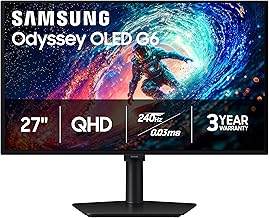
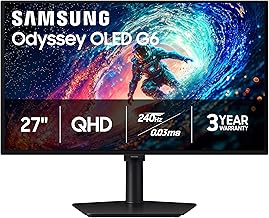
Samsung Odyssey OLED G6 (G61SH)
If you can find this one at the lower end of its price range, the QD-OLED panel delivers a contrast ratio and per-pixel response time that no IPS or VA display can match — blacks are genuinely black and motion is essentially instantaneous. It’s the enthusiast choice here, though you should be comfortable with OLED’s brightness ceiling in bright rooms and follow standard burn-in precautions.
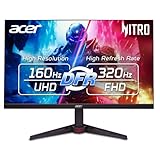
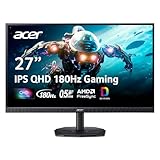
Acer Nitro KG271U N3bmiipx
Acer’s Nitro is the value champion of this roundup, delivering the same 27-inch 1440p 180Hz IPS formula as displays costing significantly more. You give up some stand adjustability and the color tuning isn’t quite as refined out of the box, but for pure frames-per-dollar it’s very hard to beat.
Samsung Odyssey G5 (G51F)
The G5 leans on a VA panel to deliver contrast that IPS competitors can’t match, making it a strong fit for single-player games with moody lighting and deep shadow detail. Motion handling isn’t quite as crisp as the Fast IPS options in this list, but it’s a well-built, reliable display that regularly sits at an attractive price.
Frequently Asked Questions
Is 1440p worth it over 1080p for gaming?
Yes, for most players. At 27 inches, 1080p starts to look noticeably soft, while 1440p is substantially sharper without the heavy GPU demands of 4K. If you have a mid-range or better graphics card from the last few generations, 1440p is the better long-term investment.
Do I need 180Hz, or is 144Hz enough?
144Hz is plenty for the vast majority of gamers, and the difference between 144Hz and 180Hz is subtle outside of competitive shooters. Since 180Hz panels now sell for similar money, take it if it’s there — but don’t sacrifice panel quality or build to get it.
Is OLED worth it at this budget?
It depends on your priorities. OLED delivers unbeatable contrast and response times, but under $500 you’ll typically accept a smaller feature set and lower peak brightness. If you game in a dim room and value image quality above all, it’s compelling; if you want a bright, do-everything display, Fast IPS is the safer buy.
Does adaptive sync really matter?
Absolutely. FreeSync and G-SYNC Compatible eliminate screen tearing and smooth out frame-rate dips, which is where most perceived stutter actually comes from. It’s one of the highest-impact features you can get at this price, and it’s now effectively standard — so there’s no reason to buy a monitor without it.
Final Thoughts
For most gamers, the ASUS TUF Gaming VG27AQ3A is the smartest buy under $500 — it nails the fundamentals of resolution, refresh rate, motion clarity, and adaptive sync without asking you to compromise anywhere significant. If you want a single display for both gaming and laptop work, the ASUS ROG XG27ACS justifies its premium with USB-C convenience and a more refined build. And if outright image quality is your priority and you can catch it on sale, the Samsung Odyssey OLED G6 offers a genuine taste of high-end display technology at a mainstream price.