Key takeaways
- Table of Contents 4 sections 10 min read 1 Quick Verdict 2 How to Choose 2.1 Contrast detection versus phase detection 2.2 Fixed focus is a legitimate choice, not a downgrade 2.3 Know when you actually need it 2.4 Manual…
What's inside
Autofocus is one of the few webcam specifications that is genuinely worth paying attention to, and it is also one of the most commonly misunderstood. The assumption is that autofocus is simply the better option and fixed focus is the cheap compromise. That is not true, and buying on that assumption can leave you with a camera that visibly hunts — drifting in and out of sharpness — every time you gesture or lean back in your chair.
What matters is not whether a camera has autofocus but what kind it has and whether your use case needs it at all. Under $100 there are now two distinct autofocus technologies in play, and the difference between them is far more consequential than the difference between 1080p and 4K. This guide explains the trade honestly and picks the models where the autofocus implementation is actually good.
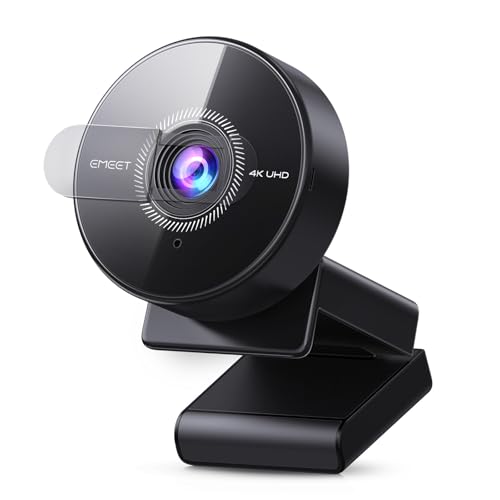
EMEET C950 4K Webcam for PC, PDAF Autofocus, USB Webcam with Microphone
Selected for "best webcam with autofocus under 100": this listing is a cameras product (EMEET C950 4K Webcam for PC, PDAF Autofocus, USB Webcam with Microphone), matching the product category this article compares.
View on Amazon
Arducam 30fps@1080P HDR USB Camera Module, 78°(D) Autofocus UVC Camera, Mini Webcam for Windows, Linux, Mac OS, Android
Selected for "best webcam with autofocus under 100": this listing is a cameras product (Arducam 30fps@1080P HDR USB Camera Module, 78°(D) Autofocus UVC Camera, Mini Web), matching the product category this article compares.
View on Amazon
ELP 20MP Autofocus USB Camera Module, High Speed USB3.0 Wide Angle Webcam
Selected for "best webcam with autofocus under 100": this listing is a cameras product (ELP 20MP Autofocus USB Camera Module, High Speed USB3.0 Wide Angle Webcam), matching the product category this article compares.
View on Amazon
saylas 2K Webcam with Lights, HD Webcam for PC, 2K@60FPS Web cam with Microphone, 65° FOV, Autofocus, Noise Cancellation, Privacy Cover, Web Camera for Computer/Laptop, USB Streaming Computer Camera
Selected for "best webcam with autofocus under 100": this listing is a lighting product (saylas 2K Webcam with Lights, HD Webcam for PC, 2K@60FPS Web cam with Microphone), matching the product category this article compares.
View on AmazonQuick Verdict
If you hold objects up to the camera, move between sitting and standing, or shoot anything other than your own face at a fixed distance, buy autofocus — and specifically buy phase-detect autofocus (PDAF) rather than a contrast-detection system. If you sit still at a desk all day, fixed focus is stable, silent and arguably the better engineering choice.
| Model | Price | Autofocus type | Capture | Best for |
|---|---|---|---|---|
| NBPOWER 1080P 60FPS | $29.99 | Autofocus | 1080p/60fps | Cheapest AF with 60fps |
| OIEXEN 2K Webcam | $31.99 | PDAF | 2K | Cheapest phase-detect AF |
| NexiGo N930AF | $39.99 | Autofocus | 1080p | Named-brand AF with software |
| EMEET NOVA 4K | $44.99 | PDAF | 4K | Best value PDAF |
| EMEET C960 4K | $47.99 | PDAF | 4K, 73° FOV | Tighter framing |
| Acer 4K all-metal unibody | $56.37 | PDAF | 4K | Sony 1/2″ sensor, dim rooms |
| EMEET S600 4K | $59.49 | PDAF | 4K | Streaming, Sony 1/2.55″ sensor |
| Logitech C920x HD Pro | $59.99 | Autofocus | 1080p/30fps | Most predictable, best supported |
| NexiGo N680E Pro | $79.99 | PDAF | 4K / 1080p60 | Ring light and dual mics included |
How to Choose
Contrast detection versus phase detection
This is the distinction that matters. Contrast-detection autofocus works by moving the lens and measuring how sharp the resulting image is, then moving again to see if sharpness improved. It is essentially a search: the camera has to overshoot slightly to know it has passed the optimum. That overshoot is what you see as hunting — the picture goes soft, then sharp, then soft again for a moment. It is cheap to implement and it is what most budget autofocus webcams use.
Phase-detect autofocus uses dedicated sensing to calculate both the direction and the distance the lens needs to travel, then moves once. No search, no overshoot, much less hunting. It is the technology that made smartphone cameras feel instant, and over the last couple of years it has arrived in webcams. When a listing says PDAF — as the EMEET NOVA at $44.99, the OIEXEN 2K at $31.99, the Acer metal-body model at $56.37 and the EMEET S600 at $59.49 all do — that is a meaningful quality signal.
Fixed focus is a legitimate choice, not a downgrade
A fixed-focus webcam sets the lens at a distance with a depth of field wide enough to cover the range where a person sits at a desk. Because you sit at roughly the same distance every day, that setting is correct almost all the time. It is never wrong in a way that changes: it cannot hunt, it cannot lock onto the wrong thing, and it cannot go soft halfway through a sentence.
Autofocus systems fail in a more distracting way. They chase. A hand crossing the frame, a person walking behind you, a gesture toward the camera — any of these can pull focus away from your face, and the viewer sees the whole image breathe. In low light the failure mode is worse, because contrast-detection systems need visible contrast to work and dim rooms have less of it. Cheap autofocus in a dark room can hunt continuously.
So the honest framing is: autofocus is better when subject distance changes, and fixed focus is better when it does not. Neither is universally superior.
Know when you actually need it
Autofocus earns its money in specific situations. Product demonstrations where you hold something up to the lens. Teaching or tutorial work where you show your hands, an instrument, or a workbench. Presentations where you stand up and step back. Any setup where the camera is on a boom arm that you reposition. Reselling, crafting and repair videos, where the subject is on the desk rather than behind it.
It earns very little in the most common case of all: one person, seated, same chair, same distance, talking. If that describes you, spend the money on sensor size or lighting instead.
Manual focus lock is the feature to look for
The ideal is a camera with good autofocus and the ability to lock it. Set focus once on your face, lock it, and you get fixed-focus stability with the option to unlock when you need to show something. This capability lives in vendor software rather than in the hardware, which is why brands that ship a control utility — NexiGo and Logitech among them — have a real advantage over anonymous listings that give you no controls at all. If a camera’s listing mentions software control, that is worth a few dollars.
Autofocus interacts with field of view
A wider lens has greater depth of field at the same aperture, which means more of the scene is acceptably sharp at once and autofocus matters less. A narrower lens has shallower depth of field and needs to be focused more precisely. The EMEET C960 4K at $47.99 has a 73° field of view, which is tighter than the 90° typical of budget webcams — a nicer, more deliberate head-and-shoulders crop, but also a configuration where good autofocus does more work.
Do not let autofocus distract you from the sensor
The best focus system in the world does not help a small sensor in a dim room. If you are deciding between a $45 PDAF camera with no published sensor and a $56 PDAF camera advertising a Sony 1/2″ sensor, the sensor is the upgrade you can actually see. Autofocus determines whether the image is sharp; sensor size determines whether it is clean. Both matter, but noise is more visible than a slightly soft frame.
The Picks in Detail
EMEET NOVA 4K — $44.99
The best value PDAF camera here. Phase-detect autofocus at under $45 is genuinely unusual, and it comes with 4K capture and dual omnidirectional microphones. For anyone who needs focus that reacts quickly without hunting — demos, tutorials, anything where you move objects in and out of frame — this is the efficient purchase.
Acer 4K all-metal unibody — $56.37
PDAF plus a Sony 1/2″ sensor in a metal body at $56.37. This is the pick if you want good autofocus and good low-light behaviour rather than choosing between them. The larger sensor also indirectly helps the focus system, since phase detection and contrast detection both perform better with a stronger signal to work from.
EMEET S600 4K — $59.49
A Sony 1/2.55″ sensor with PDAF, positioned for streaming. Slightly smaller sensor than the Acer, similar focus technology, and a brand that has been consistent in this category. If you record locally and grade afterwards, the 4K capture plus reliable focus is the combination you want.
EMEET C960 4K — $47.99
PDAF with dual omni mics and a 73° field of view. The narrower lens is the reason to choose this over the NOVA: it crops closer to your head and shoulders and keeps more of your room out of the shot. That tighter framing is worth more to how professional you look than most spec upgrades.
NexiGo N680E Pro — $79.99
The most complete package under $100: PDAF autofocus, 4K capture, an explicit 1080p 60fps mode, dual noise-cancelling microphones and a built-in ring light. The ring light is particularly relevant to autofocus, because adding light directly improves focus accuracy and reduces hunting. If you want one device that handles focus, framing, audio and lighting, this is it.
OIEXEN 2K Webcam — $31.99
The cheapest phase-detect autofocus on this list, paired with 2K capture and dual noise-cancelling microphones at $31.99. 2K is a sensible resolution: more headroom than 1080p, less USB bandwidth and CPU load than 4K. If your budget is tight and autofocus quality is the priority, start here.
NexiGo N930AF — $39.99
A 1080p autofocus webcam with a microphone at $39.99, from a brand that ships a software control utility. The focus system is not specified as phase-detect, so expect contrast-based behaviour with some hunting, but the ability to adjust and potentially lock settings in software offsets a lot of that in practice.
Logitech C920x HD Pro — $59.99
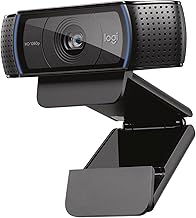
1080p at 30fps with autofocus. The C920x is not the sharpest specification on this page, but its focus behaviour is well characterised by a decade of use, its software support is the deepest available, and it does not surprise people. For a business machine that must work every morning without attention, predictability outranks specifications.
NBPOWER 1080P 60FPS — $29.99
Autofocus plus a 1080p 60fps mode plus a microphone and an RGB fill light at $29.99. The 60fps capture is the interesting part, since smooth motion helps more than resolution for gaming reactions and hand demonstrations. Treat the autofocus as contrast-based at this price and expect some hunting in dim conditions.
Related guides: 1080p vs 4k webcam which is worth it, best webcam for low light rooms, best webcam microphone quality compared, best webcam mount and tripod options, best webcam under 50 on a budget
FAQ
Is autofocus always better than fixed focus?
No. Autofocus is better when your distance from the camera changes; fixed focus is better when it does not. A fixed-focus camera never hunts, never goes soft mid-sentence and never locks onto the wrong object. If you sit at the same desk at the same distance every day, fixed focus is a stable, sensible design rather than a cost-cutting measure.
What does PDAF mean and is it worth paying for?
PDAF is phase-detect autofocus. It calculates the direction and distance the lens must move in one step, rather than searching by trial and error the way contrast-detection systems do. The result is faster locking and noticeably less hunting. It is the single most worthwhile autofocus upgrade under $100, and it now appears on cameras from about $32.
Why does my webcam keep going blurry and then sharp again?
That is contrast-detection autofocus hunting. The camera moves the lens, measures sharpness, overshoots, and corrects. It gets worse in low light, because the system needs visible contrast to evaluate and dim scenes provide less of it. More light reduces hunting immediately. A camera with PDAF, or with a manual focus lock in its software, eliminates it.
Can I lock autofocus so it stops moving?
Only if the camera’s vendor software supports it. This is a software feature, not a hardware one, and it is a strong reason to prefer brands that ship a control utility over anonymous listings that give you no settings. Locking focus on your face gives you fixed-focus stability with the option to unlock when you need to show something close up.
Does autofocus drain performance or add latency?
The focus system itself is negligible, but heavy resolution does cost CPU and USB bandwidth. A 4K autofocus camera running at full resolution on an older machine can cost you frames elsewhere. If you notice stuttering, drop the camera to 1080p or 2K — the focus behaviour is unchanged and the load falls substantially.
Prices reflect US retail at the time of writing and change frequently; confirm on the listing before purchase.